

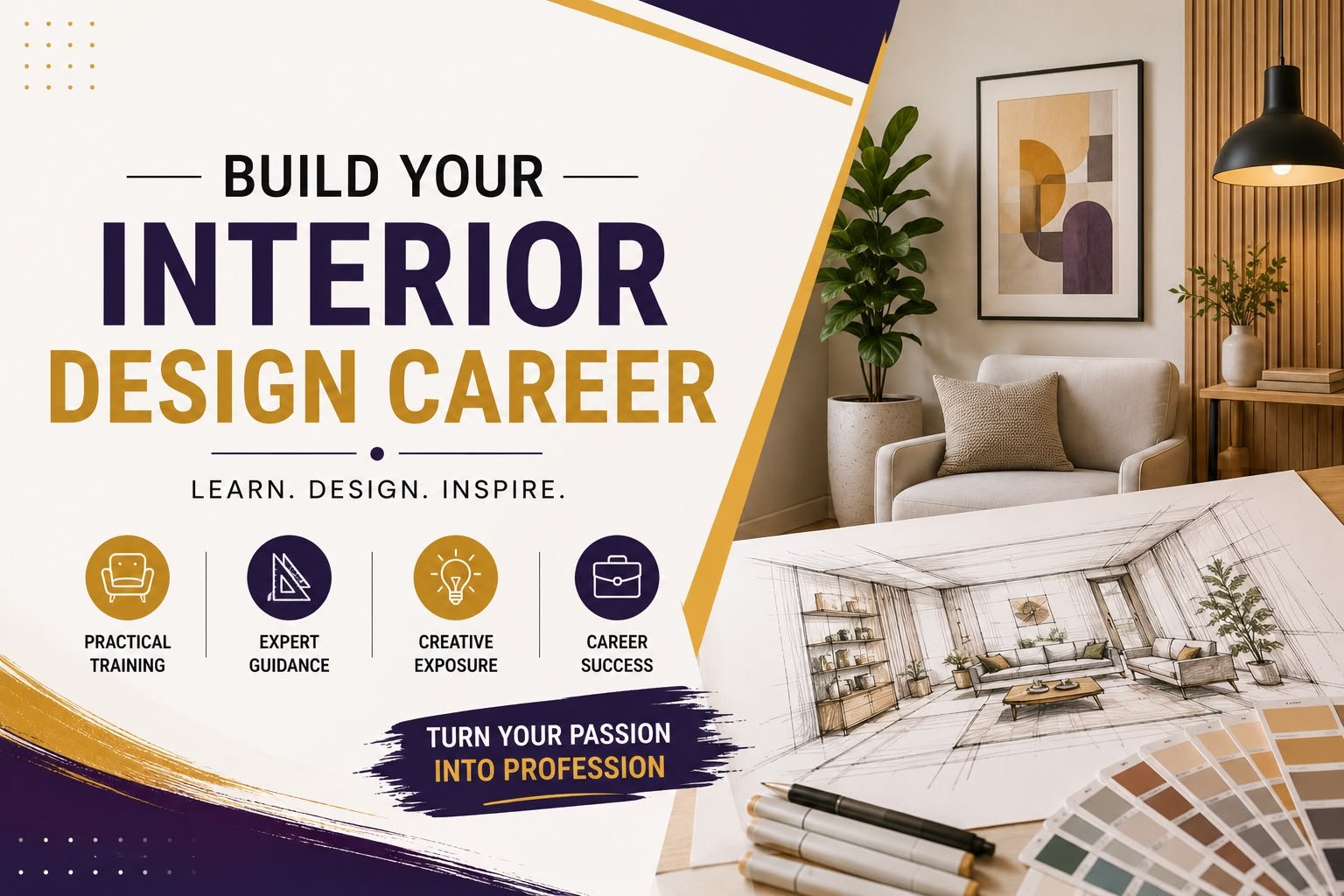
Interior Design Course Duration Explained in Detail
Introduction
Interior Design is one of the fastest-growing creative professions, offering exciting career opportunities across residential, commercial, hospitality, retail, healthcare, and workplace design. Understanding the course duration helps students plan their education, internships, and future career goals while choosing the right programme.
How Long Is an Interior Design Diploma Course?
The duration of an Interior Design Diploma generally ranges from one to three years, depending on the programme structure, curriculum, and specialization. Short-term diplomas focus on core design skills, while longer programmes provide deeper exposure to software training, live projects, internships, and portfolio development.
What Will You Learn During the Course?
Students typically learn:
- Interior Design Fundamentals
- Design Principles
- Space Planning
- Furniture Design
- Colour Theory
- Building Materials
- Lighting Design
- Residential & Commercial Interiors
- Sustainable Design
- CAD Software
- 3D Visualisation
- Project Management
- Portfolio Development
Semester-wise Learning Journey
Foundation Stage
Students develop a strong understanding of design principles through sketching, drafting, colour psychology, material studies, and design thinking.
Intermediate Stage
Students progress to residential and commercial interiors, furniture planning, CAD software, 3D visualisation, and client presentation techniques through practical studio assignments.
Advanced Stage
The final stage focuses on live projects, portfolio development, project management, industry assignments, and internship preparation to help students transition into professional careers.
Practical Learning
Practical learning forms the core of the programme through studio work, CAD software practice, 3D modelling, model making, site visits, workshops, client presentations, and collaborative projects.
Internships and Industry Exposure
Many diploma programmes include internships, industry visits, guest lectures, and interactions with experienced designers. These opportunities help students understand professional workflows, build confidence, and improve employability.
Why Course Duration Alone Shouldn't Be Your Decision
While course duration is important, employers place greater value on practical skills, software proficiency, creativity, portfolio quality, internships, and industry exposure than the length of the programme itself.
Career Opportunities
Interior Designer
Designs functional and aesthetically pleasing residential and commercial interiors.
CAD Designer
Creates technical drawings and digital layouts using professional software.
Space Planner
Develops efficient layouts that optimise functionality and user experience.
Furniture Designer
Designs innovative furniture for homes, offices, and commercial spaces.
Exhibition Designer
Creates exhibition booths, museum displays, and trade show installations.
Set Designer
Designs creative environments for films, television, theatre, and OTT productions.
Visual Merchandiser
Develops attractive retail displays and store layouts that enhance customer engagement.
Design Consultant
Advises clients on concepts, materials, furniture, and project planning.
Interior Design Entrepreneur
Starts an independent interior design studio, consultancy, or turnkey interiors business.
Why Choose NIF Global Hyderabad
NIF Global Hyderabad offers studio-based learning, CAD software training, live projects, portfolio development, internships, workshops, expert mentorship, and exposure to emerging design trends, ensuring students become industry-ready professionals.
Conclusion
The duration of an Interior Design Diploma is only one factor in choosing the right course. A programme that combines technical knowledge, practical experience, software training, and industry exposure provides students with the strongest foundation for a successful design career.
FAQs
How long is an Interior Design Diploma course?
Does the course include practical training?
Will I build a professional portfolio during the course?
What careers are available after completing the diploma?
Want to Know the Fees & Admission Process?
Speak to our counsellor and get complete details about fashion designing course fees, eligibility, syllabus and admission process.
